Becoming a civil construction manager in Australia is not an overnight process. It often involves a series of qualifications, progressively challenging roles, and the development of leadership competencies that extend beyond basic site supervision. If you're envisioning yourself coordinating major infrastructure projects, you need a clear roadmap to guide you. This article outlines the typical pathway, from entry-level positions to advanced leadership roles, and shows how qualifications like the Certificate IV, Diploma, and Advanced Diploma fit into your career journey. Whether you're just starting out or are already overseeing smaller crews, this guide can help you plot your next move with clarity and purpose.
Entry Points and Early Experience
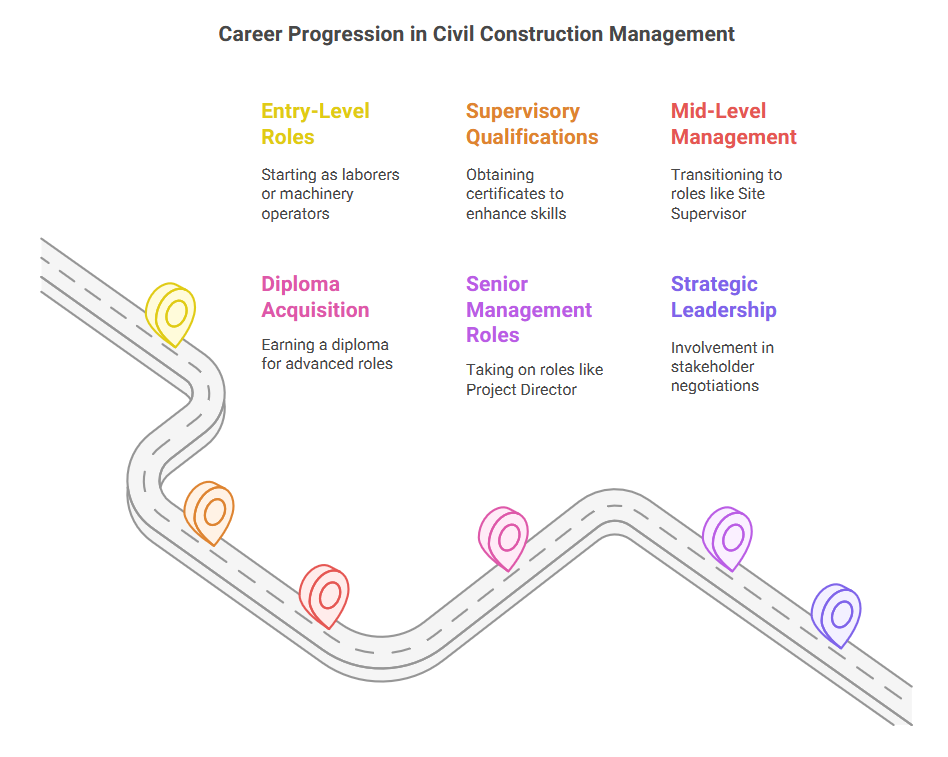
Many civil construction managers begin their careers in hands-on roles, such as labourers or operators of heavy machinery. This early exposure to on-site tasks provides a solid grounding in daily operations, workplace health and safety, and the practical challenges of civil works. Over time, individuals who show initiative and organisational skills may become Leading Hands or Team Leaders, taking on basic supervisory responsibilities under a more experienced manager.
During this phase, it's common to undertake an entry-level qualification, like a Certificate III in a related trade or a Certificate IV in Civil Construction (RII40720), to bolster on-the-job learning. This formal recognition helps you stand out when seeking your first supervisory roles. It also confirms that you have mastered fundamental competencies such as site communication, basic resource management, and safety oversight. Some people spend a few years in these early positions before deciding to leap to more advanced responsibilities, while others move swiftly if opportunities arise.
Stage 1: Entry-Level Roles
Position: Labourer, Machine Operator, or Tradesperson
Experience: 1-3 years of hands-on work
Qualification: Certificate III in relevant trade or machinery operation
Key Skills: Technical competence, safety awareness, teamwork
Stage 2: First Leadership Role
Position: Leading Hand or Team Leader
Experience: 3-5 years including some supervisory responsibilities
Qualification: Certificate IV in Civil Construction (RII40720)
Key Skills: Basic team supervision, safety enforcement, daily planning
Stage 3: Mid-Level Management
Position: Site Supervisor or Project Coordinator
Experience: 5-8 years with proven supervisory track record
Qualification: Diploma of Civil Construction Management (RII50420)
Key Skills: Project planning, budget control, stakeholder communication
Stage 4: Senior Management
Position: Construction Manager or Project Manager
Experience: 8-12 years including project management
Qualification: Advanced Diploma of Civil Construction (RII60620)
Key Skills: Strategic planning, high-level risk management, leadership
Stage 5: Executive Level
Position: Operations Manager, Project Director, or Company Director
Experience: 12+ years with extensive management experience
Qualification: Advanced Diploma plus possible further education
Key Skills: Business strategy, organizational leadership, industry expertise
Moving Towards Mid-Level Leadership
Once you have a few years of supervisory experience, you may feel ready to broaden your management scope. This is where a qualification like the RII50420 Diploma of Civil Construction Management comes into play. The Diploma opens doors to roles that require more complex budgeting, scheduling, and compliance duties. You might manage multiple teams simultaneously, coordinate with subcontractors and suppliers, and interact more frequently with project owners or government bodies.
Beyond qualifications, demonstrating consistent performance as a Site Supervisor or Project Coordinator is key. Employers look for candidates who have a track record of completing projects on time and within budget, as well as effectively leading diverse workforces. Strong communication and conflict-resolution skills become increasingly important, as you'll often be the liaison between upper management and on-the-ground teams. Successful mid-level managers usually excel at balancing short-term operational objectives with broader project goals, creating a springboard for senior-level promotion.
The pathway to becoming a civil construction manager typically involves progressing through increasingly responsible roles while acquiring formal qualifications that validate your experience and expand your knowledge base.
Reaching Advanced Management and Strategic Roles
The final leap involves taking on high-level responsibilities that can shape the direction of entire projects, or even multiple projects at once. Civil construction managers at this level often carry titles like Project Director, Operations Manager, or Construction Manager, depending on the organisation. They oversee complex tasks like stakeholder negotiations, multifaceted risk assessments, advanced budget planning, and environmental impact management. If you aspire to these roles, a qualification such as the RII60620 Advanced Diploma of Civil Construction can significantly reinforce your credibility.
Senior managers also require strategic thinking, political savviness, and the ability to navigate regulatory complexities. You might be dealing with government officials, community groups, or private investors who want regular updates on progress and costs. Strong leadership in this phase goes beyond coordinating tasks; it involves guiding the organisation's vision for entire civil construction endeavours. Some advanced managers also move into consulting or establish their own contracting firms, leveraging their reputation and network to secure lucrative projects.
Critical Skills for Civil Construction Managers:
• Technical Knowledge: Understanding of construction methods, materials, and engineering principles
• Project Management: Ability to plan, schedule, budget, and monitor complex projects
• Risk Management: Identifying potential issues and developing mitigation strategies
• Leadership: Motivating teams, resolving conflicts, and building a positive work culture
• Stakeholder Management: Communicating effectively with clients, contractors, and regulatory bodies
• Financial Acumen: Managing budgets, understanding cost structures, and maximizing profitability
• Regulatory Compliance: Ensuring projects meet safety, environmental, and legal requirements
• Problem-Solving: Finding creative solutions to unexpected challenges
Educational Pathways and Professional Development
While the career progression outlined above represents the traditional pathway, there are multiple educational routes you can take:
Traditional Qualification Pathway
Starting with a Certificate III in a relevant trade, progressing to Certificate IV, then Diploma, and finally Advanced Diploma. This step-by-step approach allows you to gain practical experience at each level while expanding your theoretical knowledge.
Recognition of Prior Learning (RPL)
If you have extensive industry experience but lack formal qualifications, RPL can be an efficient way to gain certification. This process assesses your existing skills and knowledge against qualification standards, potentially allowing you to receive credentials without completing all course components.
Accelerated Pathways
Some individuals with relevant backgrounds (such as engineering graduates or those from related industries) might enter at higher levels or progress more quickly through qualifications, especially if they demonstrate exceptional capability on-site.
Continuing Professional Development
Beyond formal qualifications, successful civil construction managers continually update their skills through industry seminars, specialized workshops, and professional memberships. Staying current with new technologies, materials, and methodologies is essential in this rapidly evolving field.
Challenges and Opportunities
The journey to becoming a civil construction manager presents both challenges and opportunities. Long hours, physically demanding conditions, and high-pressure situations are common, especially during critical project phases. However, these challenges are balanced by the satisfaction of seeing tangible results—completed infrastructure that serves communities for decades.
Australia's continued investment in infrastructure creates abundant opportunities for civil construction managers. Major road, rail, and utilities projects across the country require skilled professionals at all levels. Those who can demonstrate a combination of practical experience, formal qualifications, and leadership ability will find themselves well-positioned to advance in this essential industry.